

The information technology stakes in the US-Indonesia trade deal
Publikasi Terbaru

Selasa, 31 Maret 2026

Selasa, 31 Maret 2026

Senin, 30 Maret 2026
The Feb. 19 trade agreement between Indonesia and the United States was signed amid legal turbulence in Washington. The US Supreme Court has ruled parts of the administration’s tariff framework unlawful, prompting President Donald Trump to reimpose tariffs under an alternative authority.
Yet even if the tariff provisions are diluted, the structural clauses in the Agreement on Reciprocal Trade (ART), particularly those concerning information and communications technology (ICT), are likely to endure. Over time they could prove consequential, as they might reshape how Indonesia selects technology suppliers, regulates sensitive infrastructure and aligns its digital ecosystem with US security standards.
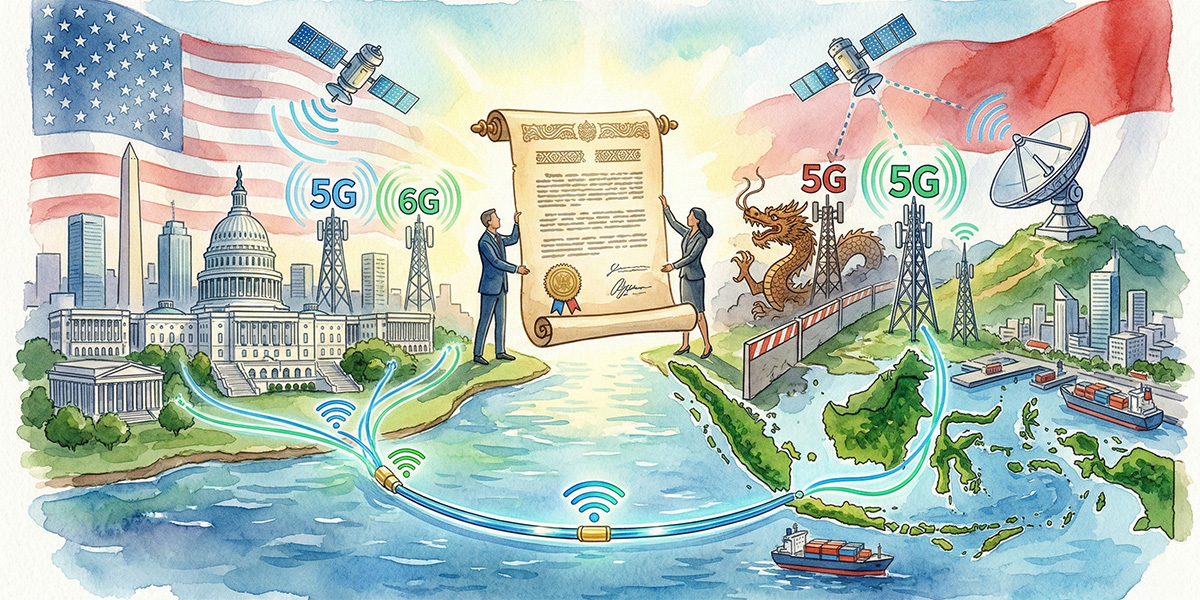
The centerpiece is Article 5.2 on “Equipment and Platform Security”. Indonesia is to use only communication technology suppliers that do not compromise the security and intellectual property of ICT infrastructure, explicitly covering 5G and 6G networks, communication satellites and undersea cables. Jakarta must also consult with Washington regarding suppliers that fail to meet these standards.