

The anatomy of the Mideast war: 24 days that alter the nature of conflict
Publikasi Terbaru

Selasa, 31 Maret 2026

Selasa, 31 Maret 2026

Senin, 30 Maret 2026
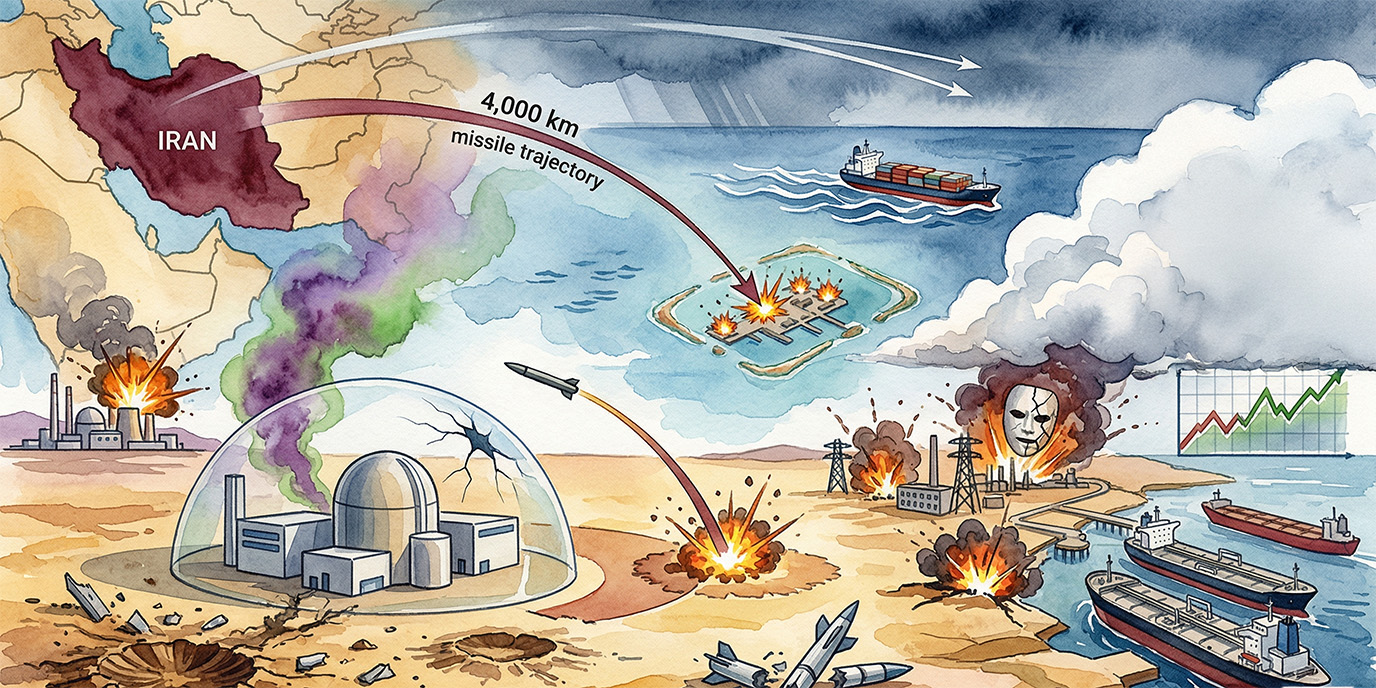
If there were a single turning point that fundamentally shifted the character of the war between Iran, the United States, and Israel, it was Saturday night, March 21—the 22nd day of the conflict. However, its full magnitude only became clear on the 24th day. Iran launched ballistic missiles at Dimona and Arad, two regions in the southern Negev located in close proximity to the Shimon Peres Negev Nuclear Research Center, a facility widely believed to house Israel’s illegal undeclared nuclear arsenal.
Latest reports confirm at least 180 casualties. For the first time, Israel’s multilayered defense system failed to intercept threats in its most sensitive sector. This was not merely a technical failure; it was a meticulously calibrated signal. Initial Israel Defense Force investigations revealed that interception failures at Arad and Dimona occurred at two distinct weak points in the air defense architecture, suggesting that the "Dome," once deemed impenetrable, now possesses tangible structural fissures.
Iran targeted the buffer zones around Dimona as a direct response to the US-Israeli strike on the Natanz facility earlier that same day. The logic presented by the speaker of the Iranian Parliament, Mohammad Bagher Ghalibaf, was stark: if Israel cannot secure its own nuclear threshold, then the war has entered a new operational phase.